Saturday, 17 January 2015

Christmas in Calatagan, Batangas


This year for something different, we decided to stay in the Philippines over the Christmas break and treat ourselves to a beach resort holiday. We were keen to avoid having to fly anywhere and searched for a hotel we could reach by car. We chose Calatagan, Batangas - partly because the hotel cottages were right on the water, and partly because Google told me it was only 132 kilometres from Manila. The lady at the car hire agency estimated it was a two hour trip. And thus informed, we were all set for a quick journey.

Of course, we were deluded and should have seen the sky opening up and slamming down its contents hard as we left home as the portentous sign it was. The amount of rainfall far exceeded Typhoon Ruby efforts in Manila last December and as we drove through Tagaytay, grey indistinct clouds obscured the famous view of Taal lake. We believed the rain was causing the delay in our progress, but in actual fact, the inclement conditions were probably not to blame.

From 2002 until 2004 we lived in Batangas city where the Engineer was involved with a port development project (see map bottom right), and while we remembered previous visits to this popular summer resort town, it now looks completely unfamiliar, with its many, many more restaurants and many, many more blocks of apartment buildings lining the mere ribbon of a main road that threads itself between the town and the lake. There are no footpaths and the charm of the previously provincial town is somewhat veiled by it having all the trappings of a crowded urban centre, complete with SM department store and Jollibee fast food restaurants.

As an aside, the murky depths of Taal lake are rather interesting as it was previously connected to the sea when a volcanic eruption in the 18th century blocked its only outlet and submerged several towns in the process. It also is one of the few places in the world where freshwater sea snakes can be found. I remember reading a book lent to me by a friend years ago that detailed the evolution of strange fish with legs, but since I cannot recall the name of the book, see here instead for a whiff of a treasure-hunting adventure in this academic's account of his quest to rediscover the location of the sunken towns.

Fortunately, by the time we arrived at our destination the weather had turned and it remained fine hereinafter. The splendid view of the sun setting over the water from our cottage later in the afternoon helped us to switch over to holiday mode pronto.


We had brought our beloved bicycles with us and on Christmas Day, we ventured forth to explore our surroundings. It really was a remote area and we encountered very few other people along the road as we headed further south. This very official-looking sign below piqued my interest. I love a good lighthouse and we have visited several lovely structures in the past, which were built by the Spanish in the nineteenth century.


I was very disappointed when we made it to the gate and found a "Keep Out" sign and barbed wire (see photo to the right). I poked my camera through the holes in the fence to sneak a few photos (I also looked for a larger gap that I could fit through but without success). The red brick, wrought iron, and the climbing pink bougainvilleas are so pretty, and there was bound to be a fabulous view over the ocean on the other side. Plus it seems like this is a working light-house whereas the other three lighthouses we have seen have all been all retirees. But it was not to be...


As Murphy's law would dictate, the trek in had come at some cost. A tree branch with a sharp, spiny thorn had heartlessly pierced my back tire. Usually when I cycle here, I keep a sharp lookout for nails from construction sites and I had never considered that a plant could be so savage. And the muddy track was rather intense which made carrying the bike out a less physically-demanding task. I thought it was only me that was down and out for the count, but the Engineer's bike had also suffered a similar fate.


While sugar cane is sticky enough, it was not going to be enough to rescue us....

But although it looks dire here, we were not that far from help. We walked for about a kilometre asking along the way for a vulcanising shop. As I write, I wonder if my sister-in-law remembers the Engineer explaining this to her when she visited the Philippines :-)

One man was quite helpful saying there was a place further along but was stumped for an answer when we asked him what the colour of the building was. We realised why when we found the small building a little later. It was of the concrete-block description, and neither a building really, nor a colour.

The important thing was that they had equipment to repair tyres for motorbikes. It is quite probable that this was the first time they had repaired bicycle tyres. Most of the traffic on the road we had encountered had been of the motorcycle and car variety. We waited while the younger people (there were about 6 and two babies at least) went and fetched an older man, who seemed to be the only one with the requisite knowledge. It was quite fascinating to see the low-tech repurposed heavy shallow object having something put inside and set alight and then placed over a flattened San Miguel beer can to heat the rubber. The down side of finding a shop with a motorbike speciality was that their attachment to pump air into the tyre was not compatible with our tyres. I took a bumpy tricyle ride back to the hotel to collect our bike pump (usually it is too big to carry with us, and yes, I will be looking for a small portable pump next trip to the land of many gadgets).

About an hour later, we were right as rain. The cost of the tricycle trip to get the pump was more than the charge for the repair for two bikes. We added a little more and wished them all a "Merry Christmas".

Post script: I recounted the puncture repair saga to my dad who knew exactly what I was talking about when I mentioned about beer cans and heavy objects being put on fire. And he even sympathised with me regarding the pump attachment. He told me how when he was young how they always had to carry around a puncture repair kit in their cars with a clamp similar in shape to what I had just described, and how they needed so many different pump attachments all the time because the one they had was never the right one. And then we moved forward in time and he remembered all the punctures he repaired on our bicycles when we were kids in Merredin, and yes dear brother, you were the star performer in this story!


Tuesday, 25 November 2014

Bahay Nakpil-Bautista, Quiapo


This old house oozing with character and our Museum Volunteers of the Philippines (MVP) (link) tour destination for the month of November is the Bahay Nakpil-Bautista. Bahay is the Filipino word for house and Nakpil and Bautista are the names of the families who lived in the home. The original owner, Dr. Ariston Bautista bought the home in 1914. He studied for his medical degree in Spain (link), and was a contemporary of the famous author José Rizal (link) and painter Juan Luna (link).


But the main attraction of the house lies in the fact that it was resided in by the woman featured in the photograph above, Gregoria de Jesus. She was the second wife of Andres Bonifacio (link) the founder of the revolutionary movement called the Katipunan and shown in the copy of the engraving below. This group fought for the independence of the Philippines from Spain at the end of the nineteenth century. Gregoria was closely involved in this struggle to achieve freedom and she wrote later of her experiences (link).


Bonifacio died in battle at the tender age of thirty-three. Gregoria re-married a year later. Her second husband was Bonifacio's general Julio Nakpil (link) (and also the brother-in-law of Ariston Bautista), and they went on to have eight children of whom only six survived, which must have been an adventure of a different kind.


The current generation of Nakpil family members are very pro-active in the maintenance of their treasured ancestral home. They have created a foundation and a website (link). Plus, it is open to the public and is one of the few historical sites I have seen in the Philippines that provides guides and detailed signage outlining the significance of what is on view. On the ground floor of the house, there are a large number of panels on the walls explaining the history of the neighbourhood area of Quiapo, the architectual style of the house (see above photograph), and the family tree. It is a really informative place to visit and well worth your time.


Throughout the house there is a noticeable amount of geometric design like you can see in the staircase shown in the pictures above and below. The house was built when the Art Nouveau style which eschewed surface decoration was popular in Europe.


The wall dividers at the top of the walls near the ceilings have distinctive patterns that resemble flowers.


The design on these chairs (below) influenced the design of the walls, staircase ...


... and the ventallila grills (below).


The painting below is called, "The Parisian Life" (link) was painted by Juan Luna in 1892. It was originally owned by Ariston Bautista and he is depicted in the painting as the man who is looking towards the woman. The man in the middle is José Rizal and the man on the far left is the painter himself. The posture of the woman is said to have been posed deliberately to represent a map of the Philippines.


The chair below is from a different home which was due to be demolished. The owners donated it to the Bahay because they wished to preserve it as it had been used by Rizal during a visit to their home. The style of carving is distinctively ornate and differs considerably from the rest of the Art Nouveau furniture in the house.


We were fortunate to be personally guided around the home by one of the family members, Ms. Bobbi Santos-Viola.  


The house has some beautiful items on display. 


It is easy to imagine it during its glory days. Here is an early photograph...


And here is the "now" photograph.


It is a shame that the waterways look like this now, particularly as the name, "Quiapo" comes from the water plant "kiyapo". It is a testament to the family's hard work that the house remains intact under such difficult conditions.


But perhaps they had a little help?


Or maybe it is the spirit of Gregorio de Jesus looking over them? The picture below shows the entrance to the room dedicated in her honour.


I am sure she must be very proud that her family has worked so hard to keep the memory of her achievements alive. It was a privilege to visit such a place. I hope it stands for another hundred years!


Wednesday, 29 October 2014

Hats off to Marikina, Manila


It is not often that you will see me wearing a hat, but I am now the proud owner of an elegant concoction of midnight-black feathers and abaca

Abaca is also known as Manila hemp and I find it interesting that this material has played important roles in the Philippines, Japan, and Australia. Prior to WW2, there was a sizeable population of Japanese people living in Davao involved in the cultivation of マニラ麻 (hemp). I also remember passionately arguing the question, "Was Australia intended as a hemp colony?" in the affirmative when I was a fresh first-year student. My view at the time was a minority one, but it seems that perhaps I was right after all. Better late than never.

I am all set for the major racing event of the year now (and no, I am not talking about the Melbourne Cup). Our Mr Moet is running again in the Railway Stakes in Perth on November 22nd and I decided to go crazy and splurge on a bit of frippery to honour him properly as he runs for glory. I shall be catching the broadcast from home in Makati. 

Going to the races has become a rather splendid affair in Perth. I was really impressed by the Myer Fashions on the Field final at Ascot a fortnight ago. There were some exquisite outfits being paraded on the day. See here for some Facebook photos (apologies if you are not on FB and cannot view them) of stunning outfit after stunning outfit. I particularly liked the blue dress you can see in the first shot, and I love the package inside. Congratulations to my beautiful sister! I would find walking on a runway terrrifying but she is a real natural.

Returning back to my reality, my tour last week with Museum Volunteers of the Philippines (MVP) took us first to the Lucban Hats factory in Marikina. 


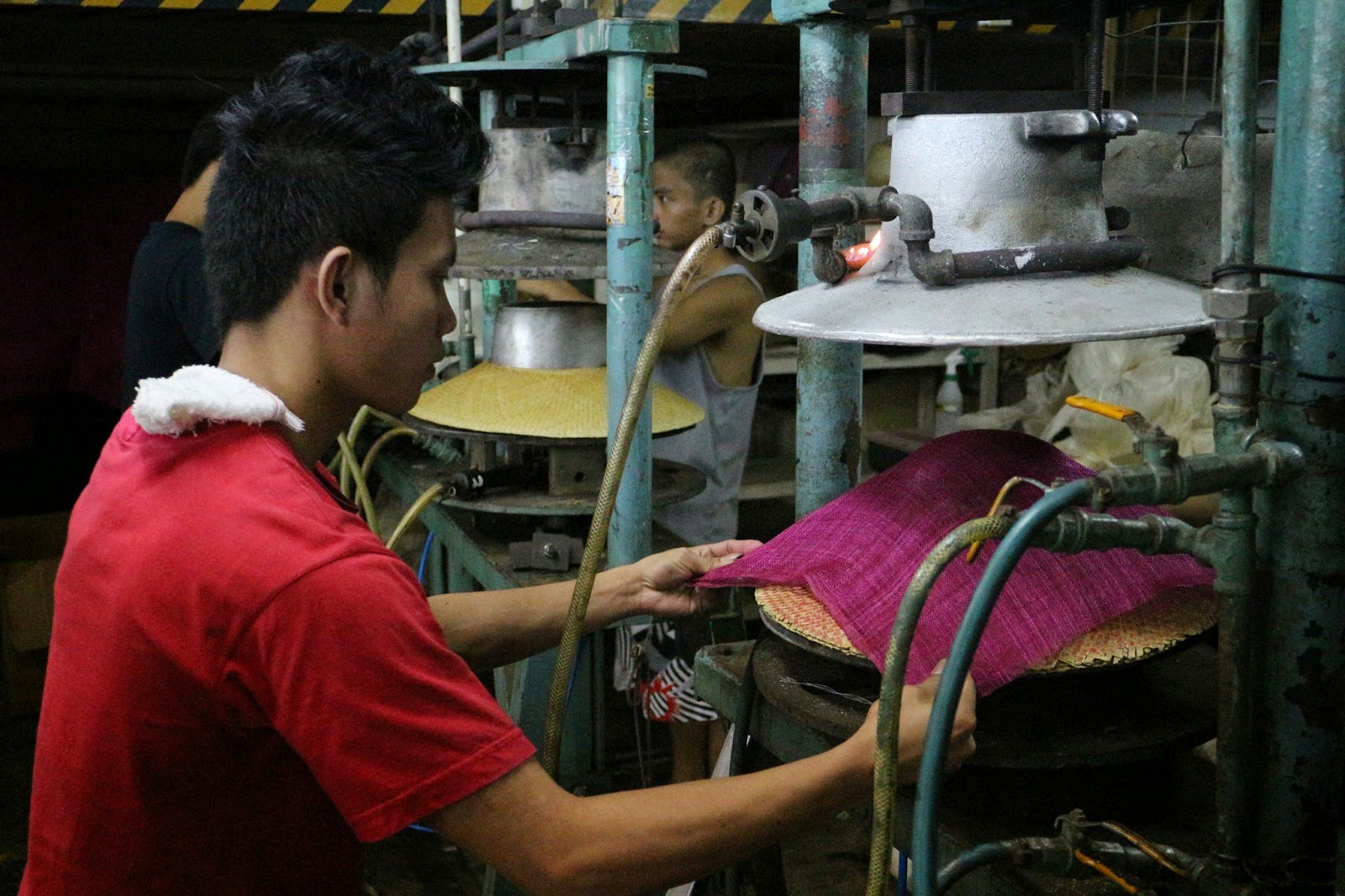
Here you can see the dyed abaca being hung out to dry near the entrance to Lucbcan Hats factory which has been in business for more than forty years. Lucban is the name of a the owners' hometown in Bicol, which is located fairly south of Manila.


And being laid out for cutting. I was intrigued by the weights they used. I wondered where they originated from?


The woman in the foreground was the fastest of the sewers. You could see her instinctively judging by touch where to sew.


The shaping of the brim.


Cutting it back to size.


Moulding the crown of the hat.


Attaching the trimmings.


Lots of coloured thread (this was my favourite photo of the day).


Sewing the brim to the crown.


There were piles of hats in various corners and nooks.


... and more striking colours.


Here is our group wearing their new purchases. I took this photo and since I was not in it, a friend was sweet enough to take me aside and take the photograph you can see at the beginning of the post.The owners of the factory arrived as we were preparing to leave (they are the couple standing dead centre) and we felt like VIPs for a short time, until we found out that they had really come to meet a group of Ambassadors' wives. That was kind of the story of the rest of our day as the timing of our visit also clashed when we visited the Shoe Museum to see Imelda Marcos' shoes later also. But that might have to be a post for another day. Time for me to hoof it out of here.


Monday, 4 August 2014

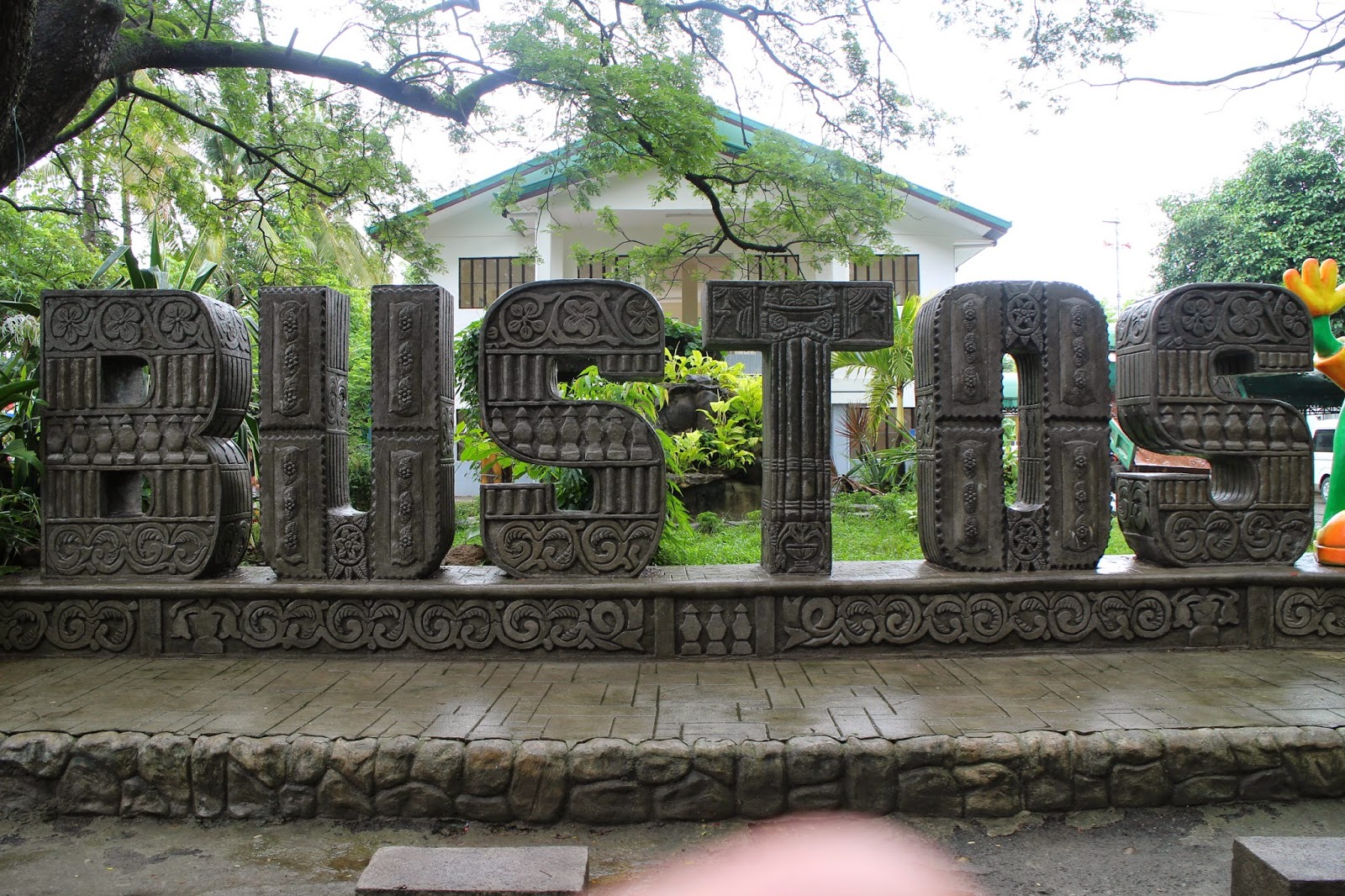
Bustos, Bulacan tour with the Philippine Heritage Conservation Society

I joined this tour last Saturday and it was very interesting. We travelled by minibus from Quezon and arrived in Bustos about an hour later. The people of Bustos are very proud of their town and are keen to promote it to increase tourist numbers. To this end, the mayor welcomed us in person, joined our tour and lunched with us at the dam (no restaurant there, it was a catered lunch). It was a good day!

 Bustos Municipal Hall
Bulacan Military Area
Minasa are cassava cookies shaped with old wooden moulds

Lopez House, Bustos, Bulacan
Another old house near the Mercado House (can you spot Sydney?)


Mercado House (stonework on first and second floor)   
Angat Afterbay Regulator Dam originally built in 1926, (reconstruction work done in 1997 and 2001)


 Bahay at Yaman ni San Martin de Porres orphanage. Houses are inspired by the Ivatan style of houses seen on Batanes Island (which is far north and often hit by typhoons).